For Parents
Welcome to The Roots, a mental health service delivered by Groundwork and commissioned by Waltham Forest. Our team of therapists and practitioners is dedicated to providing engaging, evidence-based mental health support tailored to your family’s needs.
We understand the challenges that come with fears and worries, low mood, and family relationships. Our services include CBT groups for young people, workshops and CBT based groups for parents, as well as whole-family therapy.
When you choose to access support with us, you can expect a warm and welcoming environment where children and families feel empowered and supported on their journey to better mental health. We are here to help your family thrive.

How can we help?
Children and families who are referred to us will be offered one of our various support services. In order to find out what type of support is most suited for your family, a member of our team will have an initial meeting with your child or with you as a family group. In this initial meeting, we explore the challenges, strengths and circumstances of your family.
We will ask questions about any problems, how significant the problems are, and what solutions and support might look like. This information will help us to understand how we can best support you and your family.
Individual Therapy (Ages 11-17)

Individual therapy provides a safe, supportive, and confidential space for your child to explore their thoughts, feelings, and experiences with a qualified therapist. Sessions are tailored to your child’s individual needs and can help them develop coping strategies, build resilience, improve emotional wellbeing, and navigate challenges at home, school, and in relationships.





Family Therapy
For some families, getting support altogether is the best way to work towards goals and manage challenges. Difficult emotions and experiences can affect everyone in the family, and sometimes these difficulties are connected to our relationships. We can work together over 8 sessions with the whole family to set goals, problem-solve and create helpful strategies. To help our discussions, we can use games, art and any other creative ways to share our ideas and experiences.

The aim of Family Therapy is always set by the family but each person in a family might have their own different goal for the therapy. We take time to hear everyone’s opinions and experiences so that the space is helpful for everyone in the room. Your Systemic Family Practitioner will guide discussions to focus on strengths and solutions, not using blame or judgement, to help everyone make the most of the confidential space to share their unique perspective and ideas.
What to expect from family therapy

Family Therapy can feel like a new experience. It can feel unusual to discuss ideas together and talk about things that you might not usually talk about at home. We will never make you share anything that you would rather keep private. But you can use this space to ask questions of your family members, tell stories or come up with ideas together.

Family Therapy can feel like a new experience. It can feel unusual to discuss ideas together and talk about things that you might not usually talk about at home. We will never make you share anything that you would rather keep private. But you can use this space to ask questions of your family members, tell stories or come up with ideas together.

Family Therapy can be a helpful space to create changes in a family. Think about what you might like to do differently or change within your family. We can talk about your ideas for changes together.

Family Therapy can feel like a new experience. It can feel unusual to discuss ideas together and talk about things that you might not usually talk about at home. We will never make you share anything that you would rather keep private. But you can use this space to ask questions of your family members, tell stories or come up with ideas together.

When families come together for support, there may be questions, ideas or experiences you hear that surprise you. Family members might disagree about what is most important or what needs to change. That’s okay. Being open to hearing different ideas and perspectives from others in our family is part of what makes Family Therapy so useful.

When families come together for support, there may be questions, ideas or experiences you hear that surprise you. Family members might disagree about what is most important or what needs to change. That’s okay. Being open to hearing different ideas and perspectives from others in our family is part of what makes Family Therapy so useful.
CBT Groups for Children and Young People (11-17)
We provide group-based mental health support for children and young people, using Cognitive Behavioural Therapy to address common challenges, such as fears and worries. Cognitive Behavioural Therapy, or CBT, is a type of talking therapy that helps us manage problems by changing the way we think and behave. It’s based on the idea that our thoughts, feelings and behaviour are all connected.

Each group is tailored for the ages and needs of the children in each group. Groups are typically offered to young people in age groups of 11-14 year olds and 15-17 year olds. Groups run total of 8 sessions. Participation is key within CBT, and it’s important that young people are ready for support. We are a young person led service, and will only proceed with therapeutic support where young people express that they are willing and able to take part.
In these groups, children engage in activities, discussions, quizzes and games which are designed to help them understand:

How their bodies work, and the way in which they may experience common wellbeing challenges and difficult emotions/sensations.

How their bodies work, and the way in which they may experience common wellbeing challenges and difficult emotions/sensations.

How their experiences and unique individual challenges may affect their experience of the world.

How their experiences and unique individual challenges may affect their experience of the world.

How to develop strategies and plans to overcome their specific challenges. These may include behavioural or cognitive change techniques, such as thought mapping, behavioural activation and exposure tasks (increasing positive, valued activities and facing fears).

How to develop strategies and plans to overcome their specific challenges. These may include behavioural or cognitive change techniques, such as thought mapping, behavioural activation and exposure tasks (increasing positive, valued activities and facing fears).
The group moves at a pace that helps children to feel more confident over time. Hearing from others in the group about problems and solutions can be really helpful for children, to know that they are not alone in finding something difficult. They can also get ideas about useful strategies from others in the room.
How parents and carers can support with groups
We might know a lot about CBT or common mental health challenges, but every child is unique and you are the expert in your child. The groups are much more effective if you as parent or carer can support their:

Learning: Asking about what they’ve covered in sessions, their key takeaways or if anything was new or interesting for them.

Learning: Asking about what they’ve covered in sessions, their key takeaways or if anything was new or interesting for them.

Testing out new behaviours: Homework is a key part of CBT. This is not like school homework but more like real-world experiments. Supporting children to complete homework tasks and checking how they are getting on will really benefit their progress towards their goals.

Testing out new behaviours: Homework is a key part of CBT. This is not like school homework but more like real-world experiments. Supporting children to complete homework tasks and checking how they are getting on will really benefit their progress towards their goals.

Continued Progress: Our groups are just a starting point. Most of us can only make so much progress with 8 sessions. Our group discussions and homework tasks are designed to set up children, and you, for a continued journey towards their goals. Beyond the groups, you can keep encouraging and supporting your child to move further towards their goals, building confidence over a longer period of time. Their journey towards confidence and wellbeing does not end with the eight sessions, with you as their most valuable resource supporting them into the future.

Continued Progress: Our groups are just a starting point. Most of us can only make so much progress with 8 sessions. Our group discussions and homework tasks are designed to set up children, and you, for a continued journey towards their goals. Beyond the groups, you can keep encouraging and supporting your child to move further towards their goals, building confidence over a longer period of time. Their journey towards confidence and wellbeing does not end with the eight sessions, with you as their most valuable resource supporting them into the future.

Rewarding and Celebrating Success: Rewards are a big support for children who successfully attempt a real-world experiment. Even if it didn’t go to plan, celebrating them ‘having a go’ and rewarding when they take a new step towards their goal is a big encouragement, confirming to them that they should keep going.

Rewarding and Celebrating Success: Rewards are a big support for children who successfully attempt a real-world experiment. Even if it didn’t go to plan, celebrating them ‘having a go’ and rewarding when they take a new step towards their goal is a big encouragement, confirming to them that they should keep going.

Encouragement: We cover a lot of learning in each session and the group becomes more familiar and comfortable with each other over time. Missed sessions can mean children don’t get the learning they need to overcome their challenges, so you should encourage them to attend all 8 sessions.

Encouragement: We cover a lot of learning in each session and the group becomes more familiar and comfortable with each other over time. Missed sessions can mean children don’t get the learning they need to overcome their challenges, so you should encourage them to attend all 8 sessions.
CBT Groups for Parents of 5-11 year olds
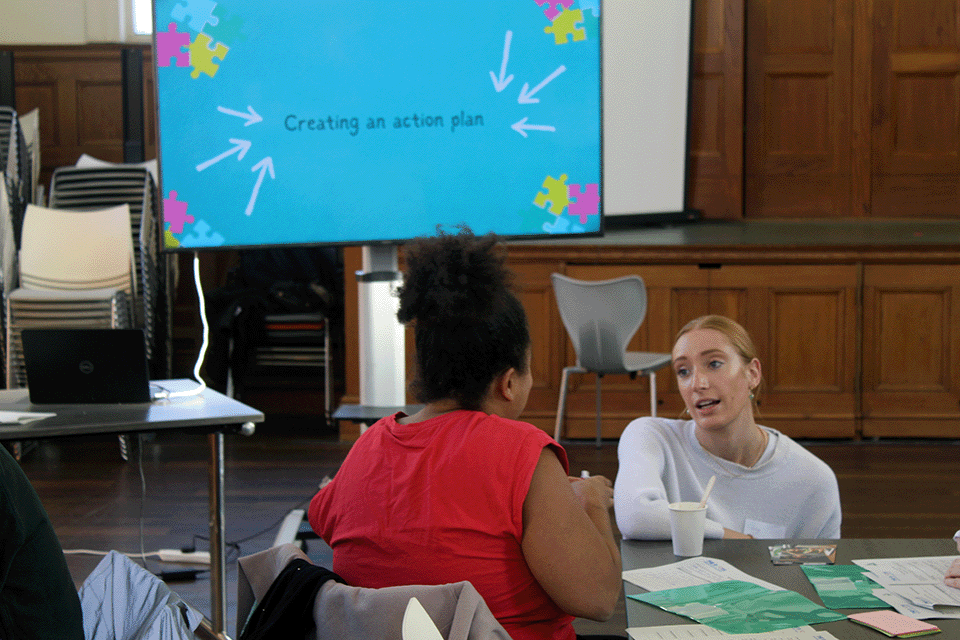
We offer information workshops and groups for parents of children who experience common mental health challenges. These groups and workshops can be especially helpful for families whose children are too young to take part in the CBT groups for young people.
Parent groups and workshops use a CBT framework, exploring how thoughts and feelings influence our behaviour. We believe that parents are the experts in their children – you know what your child needs, what they like and what they find challenging. You are best placed to support their onward journey to positive mental health.
Who are Parent CBT Groups for?

Our CBT Parent groups are designed specifically for parents of primary aged Children 5 – 11, who are experiencing difficulties with anxiety. You may have noticed that your child is struggling with fears and worries to a greater extent than they have previously, or more than other children of a similar age. Perhaps they are struggling to go to school, or are experiencing difficulties sleeping at night. Our groups aim to empower you as the parent to work with your child to alleviate these worries, and help support them to reengage with their lives in a positive way.
How we can support you

Challenges
How your child’s experiences and unique individual challenges may affect their experience of the world.
Challenges
How your child’s experiences and unique individual challenges may affect their experience of the world.

How your body works
How the body works specifically in younger children and how that might impact their reactions, and abilities to manage and maintain emotional regulation.

Taking Action
Supporting your child to take actions at home to improve their wellbeing.
The group moves at a pace that helps children to feel more confident over time. Hearing from others in the group about problems and solutions can be really helpful for children, to know that they are not alone in finding something difficult. They can also get ideas about useful strategies from others in the room.
How parents / carers can support with groups
Parents are often highly motivated to support their children to overcome challenges, often more motivated than children themselves feel about taking positive steps. By attending our workshops or groups, you can get support alongside other parents to feel equipped in navigating challenges that your child might be experiencing.

Learning: Our groups cover a lot of learning within each session. Attending each one that you’ve committed to will help you feel up-to-date on new information. Your consistent attendance also helps us to deliver the best service that we can.

Learning: Our groups cover a lot of learning within each session. Attending each one that you’ve committed to will help you feel up-to-date on new information. Your consistent attendance also helps us to deliver the best service that we can.

Peer support: Being in a space with other parents who share similar challenges and questions can provide a supportive space for parents who may feel alone with their experiences. By joining groups and workshops with other parents, you have the opportunity to receive, and give other parents, a supportive space and connection.
 Peer support: Being in a space with other parents who share similar challenges and questions can provide a supportive space for parents who may feel alone with their experiences. By joining groups and workshops with other parents, you have the opportunity to receive, and give other parents, a supportive space and connection.

Developing the strategies: CBT offers a very practical approach to problem-solving and overcoming challenges. While we will share everything we can with you, to help set your family up for achieving your goals, the real-world practice is down to you. We’re here to support and guide, but the real benefits are seen when parents and carers can proactively implement what you’ve learned within your family setting.
 Developing the strategies: CBT offers a very practical approach to problem-solving and overcoming challenges. While we will share everything we can with you, to help set your family up for achieving your goals, the real-world practice is down to you. We’re here to support and guide, but the real benefits are seen when parents and carers can proactively implement what you’ve learned within your family setting.
Family therapeutic support
Sometimes, it can be helpful for families to meet together with parents and children. Our Family Systemic approach focuses on understanding problems and solutions within the context of family relationships. We recognize that each family member has their own strengths and challenges, and how we interact within our families affects everyone.

In our family service, we bring together as many family members as possible. This might include children, parents, grandparents, aunts, uncles, or siblings. Sometimes, we might meet one-to-one, to provide a space for individual conversations. We can support parents in thinking about the family, even if children are not interested or able to attend. We’ll discuss who should attend our sessions and adjust as needed to best support your family.
Our goal is to understand different perspectives within the family and how each person’s thoughts, feelings, and behaviours interact with others. We explore communication, problem-solving, and develop strategies to support everyone. Your family practitioner will guide discussions to focus on strengths and solutions, not using blame or judgement, to help everyone make the most of the supportive space to share their unique perspective and ideas.
How you can help
Family therapeutic support can be a very different experience for both parents and children. A big part of what makes family therapeutic support helpful is when parents and children are fully on board with communicating, building trust and listening well to each other. You can help your family benefit from this support by:

Exploring Expectations: It can be helpful to find out from your children what they are expecting from the sessions. What are their hopes and worries about the session? You can then share these together with your Family Practitioner in your first session. It’s okay if they don’t know what to expect or don’t want to discuss their ideas yet, but it can help them to start thinking about what they might like to share in family sessions.

Listening well: When families come together in therapeutic support, there may be questions, ideas and experiences shared that surprise you. Family members may disagree about what is most important or what needs to change. That’s okay. We want to hear from each person in the family – hearing differences of opinion and perspectives is part of the therapeutic process. Being able to listen openly, and support others to do this, is an important part of what makes family therapeutic support helpful.

Noticing what you might like to change: In family therapeutic support, the goal is to create positive changes that can benefit the whole family. Before your first session, it can helpful to start thinking about what you would like your family to achieve from therapeutic support.

Asking questions: You can always feel absolutely confident to ask any questions you have from your Family Practitioner. It can also be possible to have some one-to-one space to talk away from others in the family. You can share any concerns or worries you have about the family coming together. Your Family Practitioner will also want to know of about any adaptations or special requirements that your family might have, in order to make the most of the confidential space together.

Exploring Expectations: It can be helpful to find out from your children what they are expecting from the sessions. What are their hopes and worries about the session? You can then share these together with your Family Practitioner in your first session. It’s okay if they don’t know what to expect or don’t want to discuss their ideas yet, but it can help them to start thinking about what they might like to share in family sessions.

Listening well: When families come together in therapeutic support, there may be questions, ideas and experiences shared that surprise you. Family members may disagree about what is most important or what needs to change. That’s okay. We want to hear from each person in the family – hearing differences of opinion and perspectives is part of the therapeutic process. Being able to listen openly, and support others to do this, is an important part of what makes family therapeutic support helpful.

Noticing what you might like to change: In family therapeutic support, the goal is to create positive changes that can benefit the whole family. Before your first session, it can helpful to start thinking about what you would like your family to achieve from therapeutic support.

Asking questions: You can always feel absolutely confident to ask any questions you have from your Family Practitioner. It can also be possible to have some one-to-one space to talk away from others in the family. You can share any concerns or worries you have about the family coming together. Your Family Practitioner will also want to know of about any adaptations or special requirements that your family might have, in order to make the most of the confidential space together.
Parent Workshops
Starting in Autumn 2024 we will be running one off workshops across Waltham Forest aimed at supporting families with common mental health and wellbeing concerns. A timetable of these events can be found here. These workshops are based both in community centres, such as Walthamstow Library, or Queen’s Road Family Hub, as well as online. They are delivered by trained mental health professionals and are free to access.
Please visit our Eventbrite to see what workshops we are currently offering and sign up to attend.

What do parents say about us?

“Caring, professional, listen carefully and tailor strategies to your child. An excellent service that has been transformative for our child. Good balance of listening, checking in, educating and working through strategies.”

“The Roots is a vital and important port in the storm for families like ours who have children who are struggling with school attendance. We felt that the service recognised that EBSA is not just an issue that affects the child, but the whole family, and the support it gave ours was invaluable.”